 THE CRESCENT FOUNDATION
STEP 01
Assign the lot
Every batch is assigned a unique lot number before it is sent for testing. The same number appears on the vial label and the certificate, so each record points to one material.

The Crescent Foundation / Mission
The Crescent Foundation is the standard every lot from Crescent Bioresearch is held to: measured by an independent laboratory, published under its lot number, and printed as numbers rather than words.
The Foundation
Industrial mission
To return the certificate of analysis to what it was meant to be: a set of measurements a research entity can check, carried by a record that cannot be quietly revised.
Crescent Bioresearch supplies laboratory compounds and reagents for in-vitro research. The Foundation is the standard those compounds are held to, written down and published so it can be checked.
The goal
A sector in which the endotoxin line carries a number, every test carries its USP chapter and the certificate exists before the product does.
Research entities set their own acceptance criteria. A certificate that prints the measurement lets each one apply its criterion before the material reaches a model.
The process
Four steps, in the same order, for every lot.
STEP 01
Every batch is assigned a unique lot number before it is sent for testing. The same number appears on the vial label and the certificate, so each record points to one material.

STEP 02
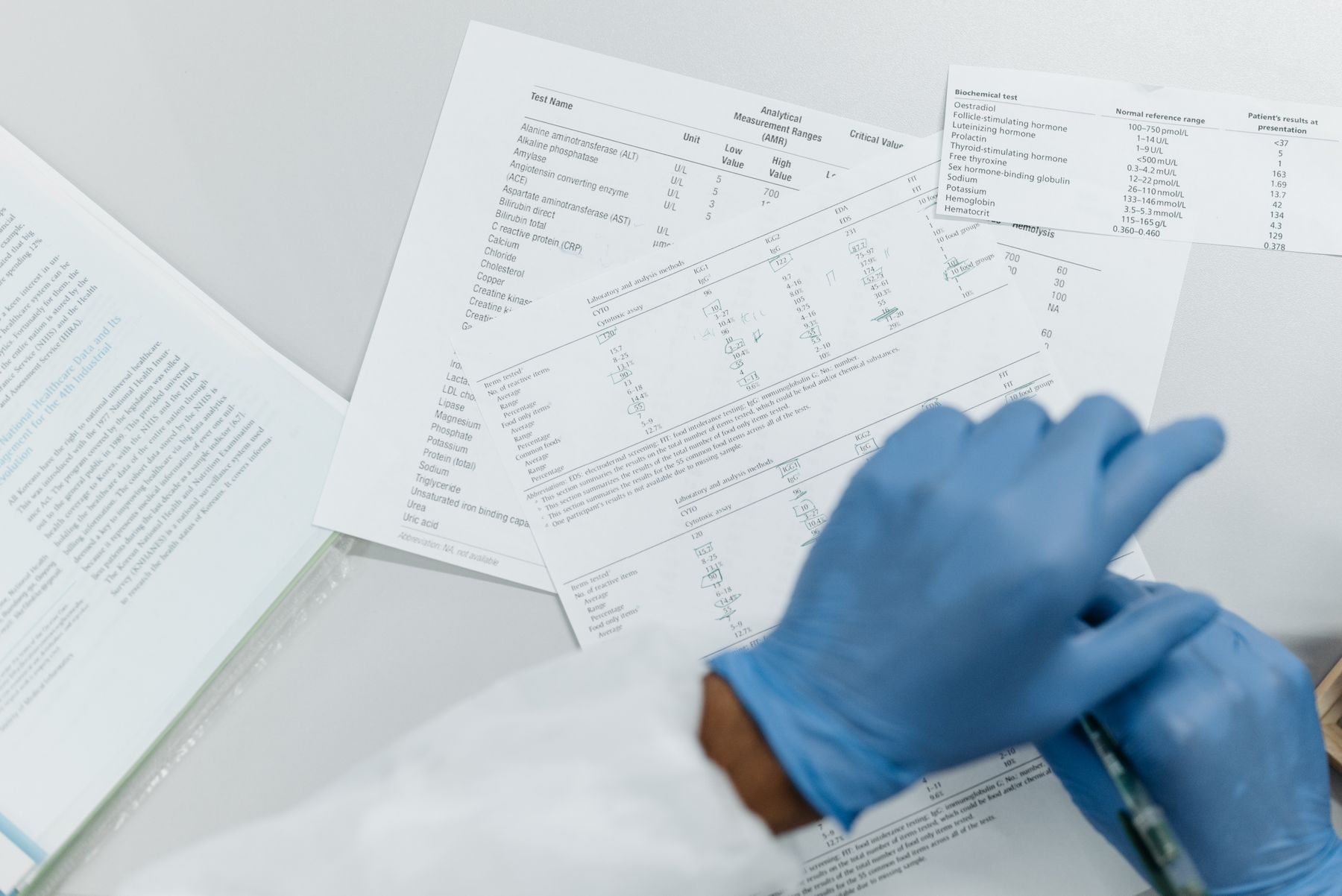
A third-party laboratory with no stake in the result measures identity by FTIR (USP <197A>), purity and content by HPLC (USP <621>) and bacterial endotoxin by Limulus amebocyte lysate testing (USP <85>), gel-clot or kinetic turbidimetric depending on the lot.
STEP 03
The full certificate, signed by the analysts who ran it, is published under its lot number before that lot is offered. The record comes first.

STEP 04
Each new lot brings a new certificate. Superseded certificates stay in the public library, so any vial can be traced to the measurements made on it.
What every certificate answers
Identity by Fourier-transform infrared spectroscopy, USP <197A>. The sample spectrum is matched against the characteristic bands of the named compound.
Purity and content by high-performance liquid chromatography, USP <621>. Purity is the main peak’s share; content is read against a reference standard.
Bacterial endotoxin by Limulus amebocyte lysate testing, USP <85>, printed as a measured value beside its limit, the lysate sensitivity and the volume.
Who it serves
No federal rule sets an endotoxin limit for a compound sold for laboratory research, and no single threshold suits every model. A cell line, a primary cell and an animal each tolerate a different amount. The Foundation’s answer is to print the measurement itself, so each research entity can apply its own criterion before the material reaches its work.
Every certificate is published before its lot is listed, kept public after the lot is superseded, and linked to the lot number on the vial.

Every lot, every figure, published before it is offered.